 Airman Vision
Airman
Vision
See threats. Keep secrets.
Private AI and computer vision for security, built on NVIDIA. The models run where the cameras and the files already live, and nothing has to leave the building to be useful.
Prototypes running today on local NVIDIA hardware
The problem
Too much noise.
Too little control.
False alarms
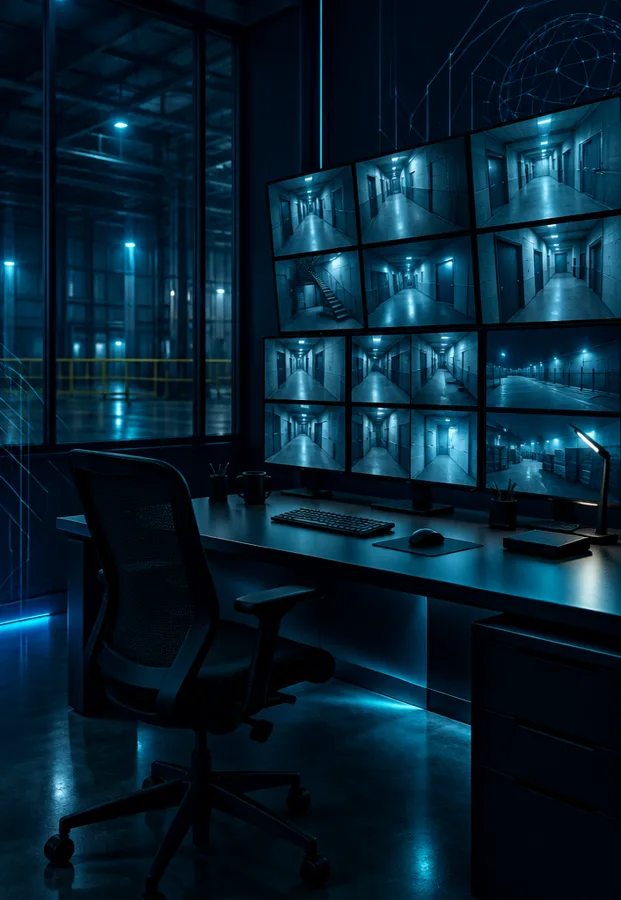
Security teams drown in alerts. A shadow, a swaying branch or a delivery driver can trigger the same response as a real threat, and after the hundredth one people stop looking closely.
Sensitive data
Camera video and company files are some of the most private data an organization owns. They should not have to leave the building just to be analyzed.
Opaque cloud AI
When the model lives in someone else's data center, the owner loses the ability to audit what it saw, why it decided, and where the footage went.
The idea
One platform. Three products.
Private software. Local intelligence. Customer control. Airman Vision is a single software platform designed to run on recommended NVIDIA hardware, with three products built on top of it.
Private AI Appliance
A local language model that answers questions over an organization's own files, inside its own walls.
How it works →Firearm and aggression detection
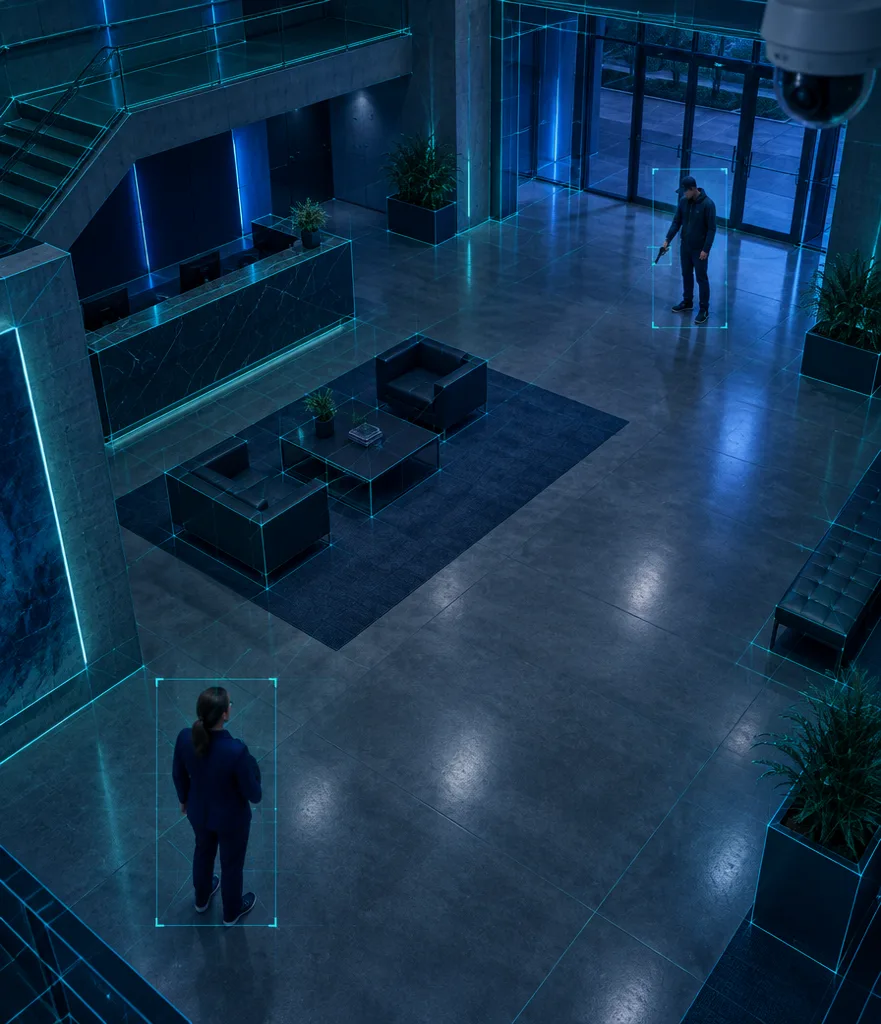
Computer vision that spots a drawn weapon or a fight on camera, then double checks itself before anyone is interrupted.
How it works →Network defense agent
Watches network traffic and turns what it finds into evidence a defense supplier can hand to a CMMC assessor.
How it works →Software first. Not a hardware reseller. Not a consulting service.
Detection
Detect threats.
Prove reliability.
Real footage of someone drawing a weapon is scarce, and that scarcity is the main reason most detection models are weak at exactly the moment they matter. Airman Vision generates realistic training scenes with NVIDIA Cosmos and Omniverse Replicator, trains on them, and then tests against real video.
After firearms and fights, the same approach extends to falls, loitering, and fire and smoke.
Publish accuracy and false alarm rates.
A second check
Before a person is interrupted.
Every gun or fight clip gets reviewed by an open source vision language model before it ever reaches a human. The detector is fast. The reviewer is careful. Together they cut the noise.
False alarm reduction is part of the detection product, not an add on.
Search
Search footage in plain English.
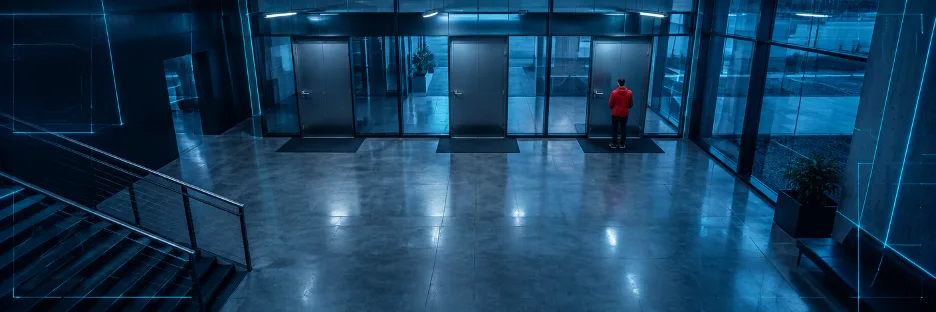
Built on the NVIDIA video search and summarization blueprint with an open vocabulary detection VLM. No tagging, no scrubbing through hours of video.
Principles
How the work gets done.
Local first
Models run on site, on NVIDIA hardware the owner controls. The cloud or a DGX is used for retraining, never as a requirement for everyday use.
Human authority
AI agents propose. People approve each action. Everything is logged.
Show the numbers
Nothing ships without published accuracy, false alarm rates and speed. If the numbers are not good enough, it does not ship.
Why the name
Airman heritage
Airman Vision was founded by a 20 year United States Air Force veteran who spent his career in mission critical operations and enterprise IT, then most of a decade in remote video monitoring. The wireframe fighter is a nod to that service. The mission is the same one: see the threat early, and protect what matters.
See the research plan →Follow the work
Built in the open, one prototype at a time.
Researchers, NVIDIA developers and security practitioners who want to compare notes are welcome to reach out.
kevin.vettorel@airmanvision.online